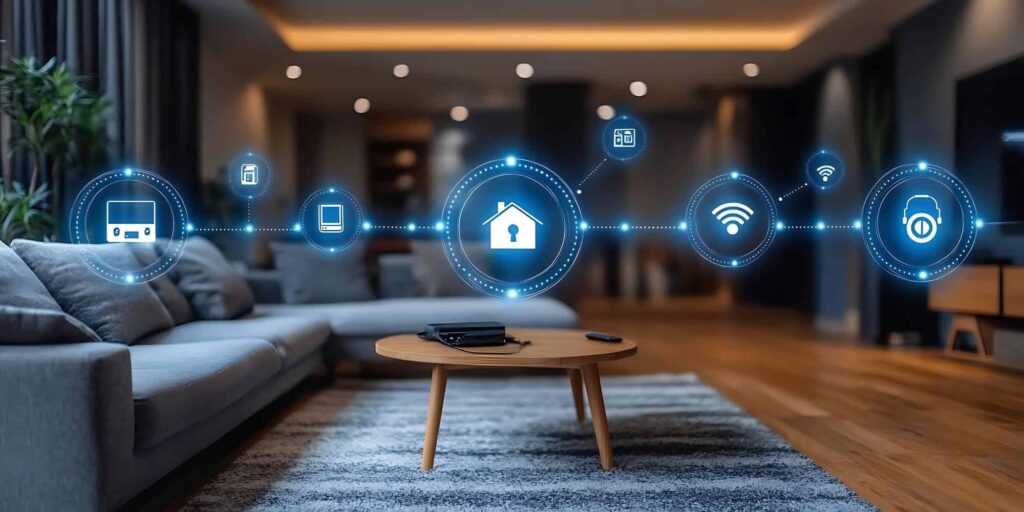
How Technology Is Changing Modern Living
Not long ago, the idea of controlling your lights from a smartphone or monitoring your home while on holiday sounded like something from a science fiction movie.
Today, these technologies are becoming increasingly common in Mauritius.
As internet connectivity improves and smart devices become more affordable, homeowners are embracing technology to improve comfort, convenience, security and energy efficiency. What was once considered a luxury is gradually becoming part of everyday life.
From modern apartments in Ebene and Moka to family homes in Grand Baie, Flic en Flac and Curepipe, smart home technology is transforming the way Mauritians live.
Smart Security Is Leading the Way
If there is one area driving smart home adoption in Mauritius, it is security.
Homeowners increasingly want the ability to monitor their properties from anywhere in the world. Modern smart security systems allow users to view live camera feeds, receive alerts when movement is detected and control access remotely using mobile applications.
For families who travel frequently or own secondary properties, this technology provides valuable peace of mind. Whether checking on a home during a holiday or monitoring deliveries while at work, smart security has become one of the most practical applications of home automation.
As concerns about safety continue to grow, demand for connected security solutions is expected to remain strong.
Smart Lighting Is Becoming More Popular
Smart lighting is another trend gaining momentum across Mauritius.
Instead of relying on traditional switches, homeowners can control lighting through smartphones, voice assistants or automated schedules. Lights can be programmed to turn on at sunset, switch off when no one is home or adjust brightness according to specific preferences.
Beyond convenience, smart lighting can help reduce electricity consumption by ensuring lights are only used when needed.
Many homeowners appreciate the ability to create different lighting environments for relaxation, entertainment or work, all with a few taps on their phone.
Energy Efficiency Is Driving Adoption
With energy costs remaining an important consideration for households, many people are exploring technologies that help reduce electricity consumption.
Smart home systems allow homeowners to monitor energy usage in real time and identify opportunities to improve efficiency. Smart plugs, automated appliances and intelligent energy management systems can help reduce unnecessary consumption.
This trend aligns closely with Mauritius’ broader interest in sustainability and renewable energy. As more homes adopt solar power systems, smart technologies are increasingly being used to optimise energy production and consumption.
The combination of smart homes and renewable energy is creating new possibilities for more sustainable living.
Voice-Controlled Homes Are Becoming Reality
Voice assistants have become increasingly familiar in households around the world, and Mauritius is no exception.
Devices capable of responding to voice commands allow homeowners to control lighting, music, appliances and other connected systems without touching a switch or remote control.
Although adoption remains relatively modest compared to larger international markets, interest in voice-controlled technology continues to grow as consumers become more comfortable with connected devices.
For many users, the appeal lies in convenience. Simple tasks can be completed instantly through natural voice commands, creating a more seamless living experience.
Smart Air Conditioning and Climate Control
Mauritius experiences warm temperatures for much of the year, making climate control an important aspect of daily comfort.
Smart air conditioning systems allow homeowners to manage temperatures remotely and create automated schedules that improve efficiency. Instead of running continuously, systems can adjust based on occupancy, weather conditions or specific preferences.
This not only enhances comfort but can also contribute to lower electricity bills.
As energy efficiency becomes a greater priority, smart climate control systems are likely to become more common in both new developments and existing homes.
Home Automation Is Moving Beyond Luxury
In the past, home automation was often associated with luxury villas and high-end properties.
Today, that perception is changing.
Many smart devices are becoming more affordable and easier to install. Homeowners no longer need complex custom systems to enjoy the benefits of automation.
Simple solutions such as smart plugs, connected lighting and wireless security cameras can often be added without major renovations.
This accessibility is helping smart home technology reach a much broader audience across Mauritius.
Smart Homes and Property Value
Technology is also beginning to influence real estate decisions.
Buyers increasingly view smart home features as attractive additions that enhance convenience, security and efficiency.
Developers of modern residential projects are incorporating smart technologies into new properties to differentiate themselves in a competitive market.
Features such as smart access control, energy management systems and connected security solutions can contribute to a property’s appeal and perceived value.
As buyer expectations evolve, smart home capabilities may become a standard feature rather than a premium upgrade.
The Role of the Internet of Things
Behind most smart home technologies is the Internet of Things, often referred to as IoT.
This concept describes a network of connected devices that communicate with each other through the internet.
Examples include:
- Smart cameras
- Connected doorbells
- Lighting systems
- Smart televisions
- Automated appliances
- Energy monitoring devices
By sharing information and working together, these devices create a more intelligent and responsive home environment.
The continued growth of IoT is expected to drive further innovation in the smart home sector.
Challenges Facing Smart Home Adoption
Despite growing interest, several challenges remain.
The initial cost of certain systems can discourage some homeowners, particularly when multiple devices are required.
Internet reliability is another consideration since many smart devices depend on stable connectivity.
Privacy and cybersecurity also remain important concerns. As more devices become connected, homeowners must take steps to secure their networks and protect personal information.
These challenges are not unique to Mauritius, but they highlight the importance of careful planning and responsible technology use.
What the Future Could Look Like
The future of smart homes in Mauritius is likely to extend far beyond lighting and security.
Emerging technologies may include:
- Intelligent energy management
- Predictive maintenance systems
- AI-powered home assistants
- Smart water management
- Integrated renewable energy solutions
- Advanced health monitoring systems
As technology becomes more affordable and user-friendly, adoption is expected to accelerate.
The concept of a connected home may eventually become as common as having internet access itself.
Why Smart Homes Matter
Smart homes are about more than gadgets.
At their core, they aim to improve quality of life.
They can help homeowners save time, reduce energy costs, enhance security and create more comfortable living environments. For elderly residents or people with mobility challenges, automation can also improve accessibility and independence.
As Mauritius continues embracing digital transformation, smart homes represent an important part of the broader shift towards a more connected and technology-driven future.
Smart home technology is no longer a concept reserved for the future.
Across Mauritius, homeowners are increasingly adopting connected devices that improve security, efficiency and convenience. From smart lighting and automated climate control to advanced security systems and energy management solutions, technology is transforming the way people interact with their homes.
While challenges remain, the direction is clear.
As devices become more accessible and technology continues to evolve, smart homes are likely to become an increasingly common feature of modern Mauritian living.