The Music, Dance and Soul of the Island
If there is one cultural tradition that truly belongs to Mauritius, it is Sega.
Long before modern concerts, music festivals and streaming platforms, Sega was bringing communities together through rhythm, storytelling and dance. Today, it remains one of the strongest symbols of Mauritian identity and continues to be performed at cultural events, family gatherings, festivals and celebrations throughout the island.
For many Mauritians, hearing the sound of a ravanne immediately evokes memories of community gatherings, beach celebrations and moments shared with family and friends.
Sega is more than entertainment.
It is a living expression of the island’s history, resilience and cultural diversity.
The Origins of Sega
The story of Sega begins centuries ago during one of the most difficult periods in Mauritian history.
The music emerged among enslaved Africans who were brought to Mauritius during the colonial era. Far from their homelands and separated from their families and traditions, they used music, rhythm and dance as a way to express emotions, preserve cultural memories and find moments of comfort.
Around campfires and in small communities, songs were created to tell stories of hardship, hope, love and everyday life. These gatherings became an important form of cultural resistance and emotional expression.
Over time, these traditions evolved into what we now recognise as Sega.
Although the music has changed and adapted throughout the years, its roots remain deeply connected to the experiences of the island’s early African communities.
More Than Just Music
What makes Sega unique is that it combines several forms of artistic expression.
It is music.
It is dance.
It is storytelling.
And it is community.
Traditional Sega songs often describe everyday experiences, relationships, social issues and local life. Many songs are sung in Creole, making them accessible and relatable to ordinary Mauritians.
The lyrics often carry humour, wisdom and social commentary, reflecting the realities of the communities from which they emerged.
This connection to everyday life is one reason Sega has remained relevant for generations.
The Traditional Instruments of Sega
At the heart of traditional Sega are three iconic instruments.
The most important is the ravanne, a large circular drum made from a wooden frame and stretched animal skin. Its distinctive rhythm forms the foundation of Sega music and is instantly recognisable throughout Mauritius.
Alongside the ravanne is the maravanne, a percussion instrument traditionally made from sugar cane stems filled with seeds or grains. The shaking sound adds texture and energy to the music.
The triangle completes the trio, providing a metallic rhythm that complements the deeper sounds of the ravanne.
Together, these simple instruments create a rich and powerful musical experience that remains central to traditional Sega performances.
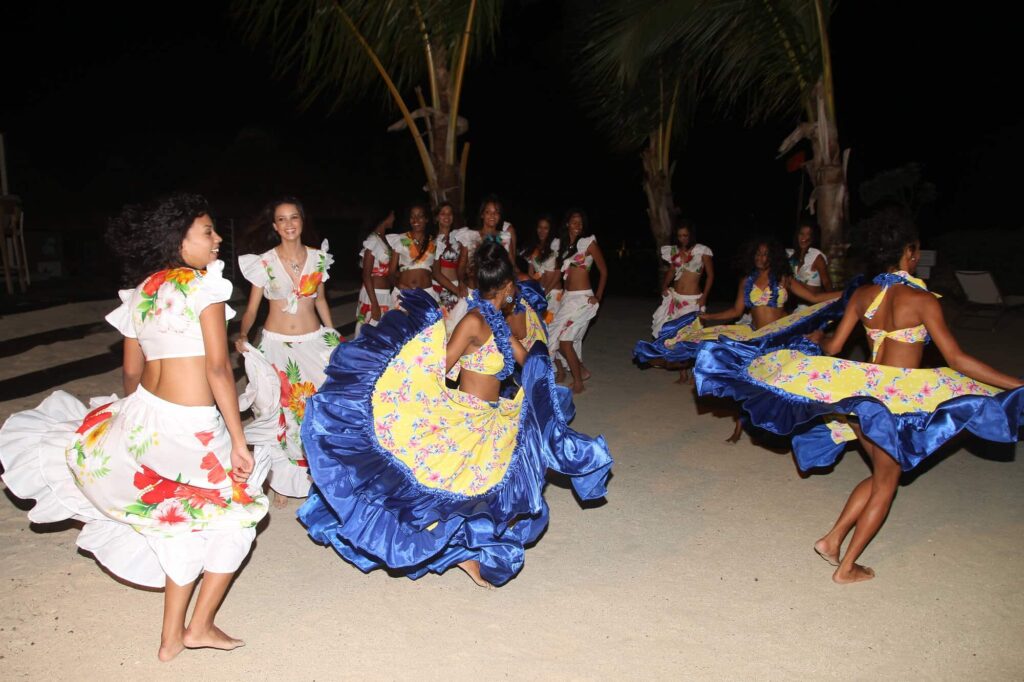
The Art of Sega Dancing
Sega dancing is as important as the music itself.
Unlike many formal dance styles, Sega is known for its spontaneity and freedom. Dancers move their hips, feet and arms in flowing movements that reflect the rhythm of the music.
Traditional Sega is often danced barefoot, allowing performers to feel connected to the earth and the natural environment. Historically, many performances took place outdoors, particularly near the coast or around communal gathering spaces.
The dance is energetic, joyful and expressive. It encourages participation rather than perfection, which is one reason it remains so popular at celebrations and community events.
Watching a live Sega performance is often enough to inspire people to join in.
Sega and Mauritian Identity
Mauritius is a multicultural society shaped by influences from Africa, India, China and Europe.
Despite this diversity, Sega has become one of the few cultural elements that belongs to all Mauritians.
People from different communities, backgrounds and generations recognise Sega as an important part of the national identity.
Whether performed during a cultural festival, a wedding, a public holiday or a family celebration, Sega has a unique ability to bring people together.
It reflects the shared history of the island and serves as a reminder of the resilience and creativity of its people.
From Traditional Sega to Modern Sega
Like all living cultural traditions, Sega has evolved.
Traditional Sega, often referred to as Sega Tipik, remains highly respected and continues to be performed across Mauritius. However, modern musicians have introduced new instruments, contemporary influences and innovative styles.
Today’s audiences may hear elements of reggae, jazz, pop or electronic music blended with traditional Sega rhythms.
This evolution has helped keep the genre relevant to younger generations while introducing Mauritian culture to international audiences.
Although styles have changed, the essence of Sega remains the same: rhythm, storytelling and community.
UNESCO Recognition
In 2014, Sega Tipik was recognised by the UNESCO as part of the Intangible Cultural Heritage of Humanity.
This recognition highlighted the cultural importance of Sega and its role in preserving the history and traditions of Mauritius.
The UNESCO designation also helped raise international awareness of the art form and encouraged efforts to protect and promote traditional Sega practices.
For many Mauritians, this recognition was a source of national pride.
It confirmed what locals had known for generations: Sega is one of the country’s greatest cultural treasures.
Where You Can Experience Sega Today
Although Sega can be found throughout Mauritius, some occasions provide particularly memorable experiences.
Festival Kreol often features some of the island’s best performers and showcases different forms of Sega. Cultural centres, community events and national celebrations regularly include performances as well.
Many hotels and tourism venues also organise Sega shows, although the most authentic experiences are often found during local cultural gatherings and community celebrations.
These events allow visitors to experience Sega in its natural setting, surrounded by the people and traditions that keep it alive.
Why Sega Continues to Matter
In an era of globalisation and rapidly changing cultural trends, preserving traditional heritage has become increasingly important.
Sega helps maintain a connection between generations.
It teaches younger Mauritians about their history.
It preserves language, music and traditions.
Most importantly, it reminds people of the values of community, resilience and cultural pride.
As Mauritius continues to modernise, Sega remains a powerful link to the past while continuing to evolve for the future.
Sega is far more than a musical genre.
It is a living expression of Mauritian history, culture and identity.
Born from hardship, shaped by generations and celebrated across the island, it has become one of the strongest symbols of what it means to be Mauritian.
Whether experienced through the beat of a ravanne, the movement of dancers or the stories told through song, Sega captures the spirit of Mauritius in a way that few other traditions can.
To understand Mauritius, one must understand Sega. And to hear Sega is to hear the heartbeat of the island.